
Why Custom Exhibition Stall Fabrication is Key to Standing Out
Fast Summary
- Stand Out: Custom fabrication beats shell schemes by offering total design freedom on raw space.
- Precision Matters: High-end stalls require exact engineering to ensure safety and perfect fitment.
- Avoid Waste: Manual math leads to costly errors in material ordering.
- The Tool: Use our Exhibition Stall Costing Calculator to streamline your project estimates.
The Strategic Advantage of Raw Space: A Blank Canvas for Your Brand
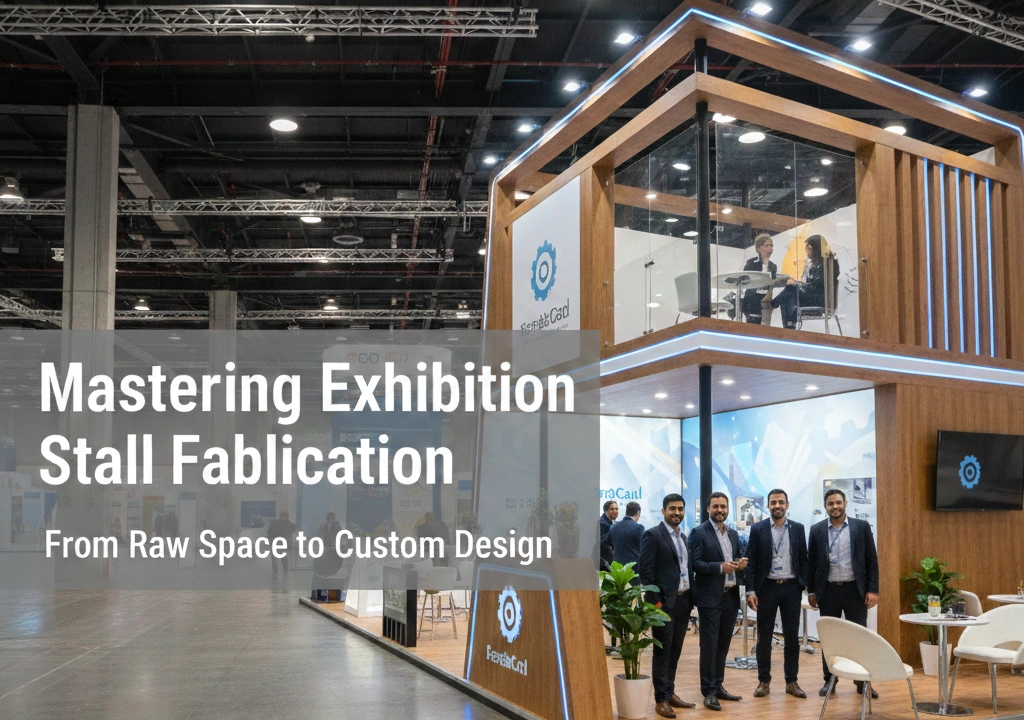
Imagine being handed a blank canvas instead of a pre-drawn outline. That’s essentially the difference between a shell scheme and renting raw exhibition space. Raw space offers exhibitors complete freedom to design and build a structure that is truly unique, impactful, and perfectly aligned with their marketing objectives. This isn’t just about aesthetics; it’s about functionality, brand immersion, and creating an experience that resonates with visitors.
- Unleashed Creativity: Custom stands allow for unique architectural elements, towering structures, multi-level designs, and innovative lighting solutions that are impossible within the confines of a shell scheme.
- Optimized Flow & Functionality: Design specific zones for product demonstrations, private meeting rooms, VIP lounges, interactive displays, or even mini-auditoriums. A can be engineered to guide visitors through a specific journey.
- Enhanced Brand Identity: Every curve, color, and material can be meticulously chosen to reflect brand values and messaging, creating a cohesive and immersive environment that shouts “this is us.”
Choosing raw space and investing in bespoke exhibition stall fabrication isn’t just an expense; it’s a strategic investment in brand visibility, lead generation, and competitive differentiation.
The Craft Behind the Creation: How Exhibition Stall Fabricators Work
Bringing a custom exhibition stand to life is a complex, multi-stage process that requires a blend of artistic vision, engineering precision, and logistical mastery. This is the domain of the professional exhibition stall fabricator. Their role extends far beyond mere construction; they are the architects of temporary brand environments.
1. Concept & Design Translation
It all begins with a client’s vision and a designer’s rendering. The fabricator’s first task is to meticulously review the 2D designs and transform them into detailed 3D technical drawings. This involves:
- Material Selection: Advising on the best materials (MDF, plywood, metal frames, acrylic, tension fabrics, etc.) for durability, aesthetic appeal, and budget.
- Structural Integrity: Ensuring the design is structurally sound, safe, and adheres to all exhibition hall regulations. This is critical, especially for tall structures or hanging elements.
- Feasibility Assessment: Identifying potential challenges in fabrication, transport, and on-site assembly, and proposing practical solutions.
For brands seeking to turn their unique vision into a tangible reality, partnering with an experienced Exhibition Stall Fabricator is crucial. They have the expertise to execute every detail flawlessly, from the grand entrance to the smallest display shelf.
2. The Fabrication & Production Phase
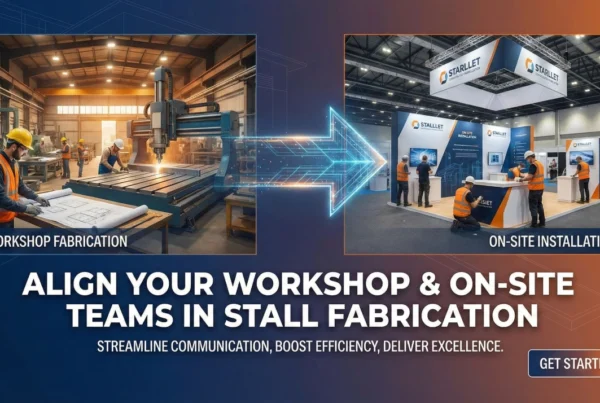
Once designs are finalized, the workshop buzzes with activity. This is where the actual exhibition stall fabrication takes place. Components are precisely cut, shaped, welded, painted, and finished according to the detailed technical drawings. This phase often involves:
- Carpentry & Joinery: Creating custom display units, counters, wall panels, and flooring.
- Metalwork: Fabricating robust frames, trusses, and structural supports.
- Graphics Production: Printing and applying high-resolution graphics, branding elements, and interactive screens.
- Electrics & Lighting: Integrating intricate lighting schemes, power outlets, and AV equipment.
Precision is paramount here. Even a slight miscalculation in dimensions can lead to major problems during the high-pressure, often overnight, on-site assembly. This is particularly true for complex elements of exhibition booth design.
3. Pre-Assembly & Logistics
Many fabricators conduct a pre-assembly of critical components in their workshop to ensure everything fits perfectly before it’s shipped to the exhibition venue. This minimizes surprises and speeds up the installation process. Logistics planning for transport, installation, and dismantling is also a key part of the fabricator’s role.
The Unseen Challenge: Mastering Cost and Material Estimation
Behind every stunning custom stand lies a meticulous budget and material plan. The custom nature of exhibition stall fabrication means that calculating exact material requirements and projecting costs can be incredibly complex. Fabricators must account for:
- Different material grades and thicknesses (MDF, acrylic, metal sheets).
- Variable dimensions for panels, curves, and structural elements.
- Paint, laminate, and finish quantities.
- Labor hours for design, cutting, assembly, and finishing.
Manual estimation often leads to inaccuracies—either over-ordering expensive materials (eating into profits) or under-ordering (causing costly delays and last-minute procurement). In a fast-paced industry where deadlines are rigid and budgets are tight, guesswork is a luxury no fabricator can afford. This is where advanced tools become indispensable for efficient planning.
The Solution: Precision at Your Fingertips with FabCal
Modern exhibition stall fabrication demands precision, not just in craftsmanship, but in calculation. To minimize waste, optimize costs, and ensure project profitability, fabricators need smart tools.
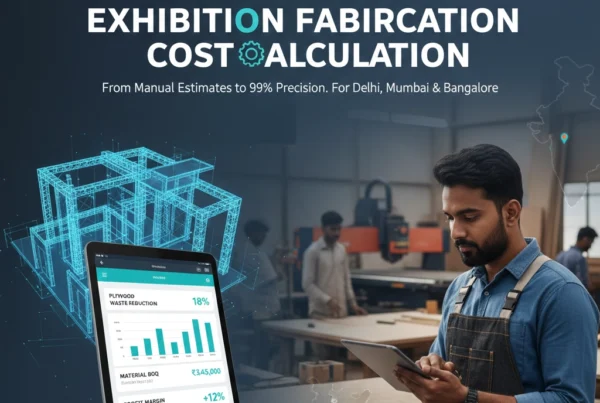
Why spend countless hours wrestling with spreadsheets and manual calculations when you can get an instant, accurate breakdown of costs and materials? Our Exhibition Stall Costing Calculator is designed to empower fabricators, turning complex project geometries into clear, actionable estimates in seconds.
Ready to quote your next big project with confidence? Stop guessing and start calculating. Explore how FabCal can revolutionize your workflow today!