

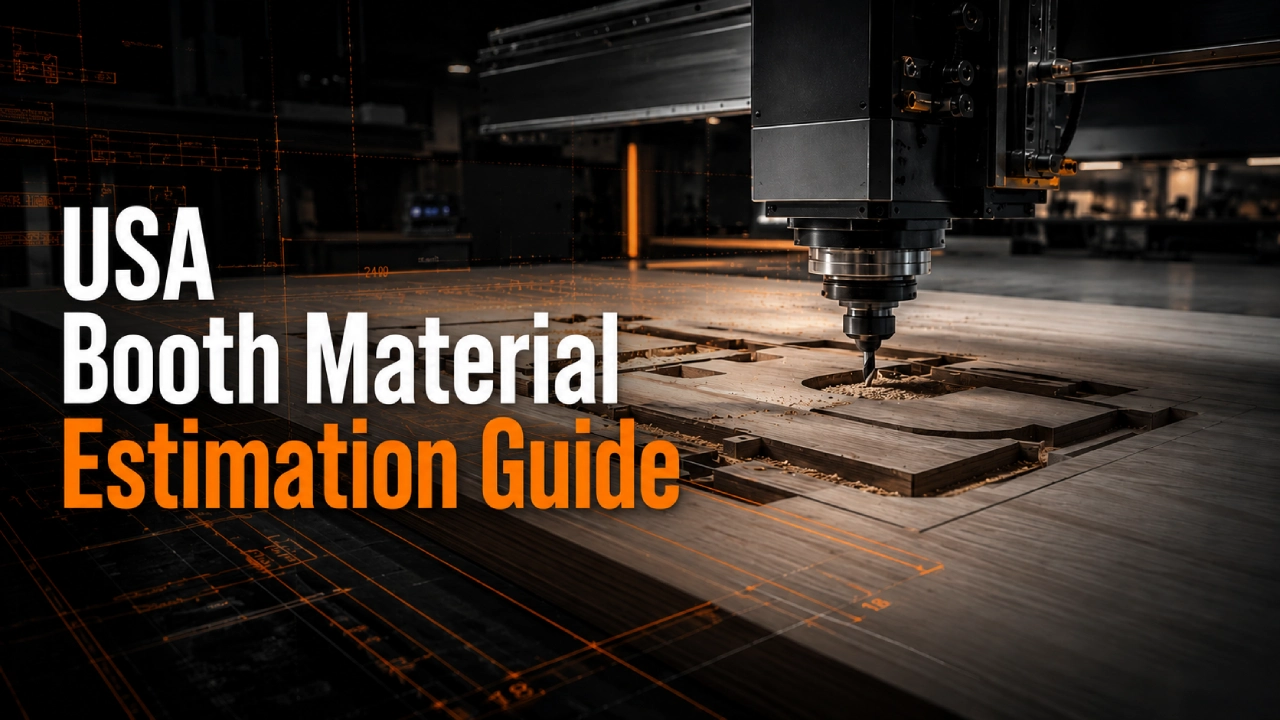
Regional Spoke Guide // North American Market
Understanding Standard Sheet Goods: A Guide to MDF vs. Plywood Dimensions for US Trade Shows
For international exhibition builders, entering the North American trade show circuit brings an immediate technical hurdles: abandoning the metric system. While global workshops handle metrics flawlessly, domestic US convention venues operate entirely on standard imperial frameworks. Executing an accurate, early-stage USA booth material estimation model is critical to ensuring your structural blueprints translate smoothly into local materials without triggering severe delays or massive budget overruns.
The Structural Realities of Imperial Substrates and Cutting Waste
The backbone of North American exhibit carpentry relies heavily on the standard 4×8 foot sheet profile. When project engineers run a manual imperial sheet goods layout, they frequently miscalculate the gap between standard 1220x2440mm metric panels and true US architectural dimensions. This slight spatial variance leads to minor seam discrepancies that can throw off an entire custom wall assembly when built on-site.
Furthermore, managing your baseline exhibit fabrication margins requires accounting for rigid domestic union labor dynamics. In cities like Las Vegas, Chicago, or Orlando, on-site modifications face strict jurisdictional regulations. If your workshop teams send components that require extensive cutting, routing, or restructuring on the convention floor, the resulting specialized union carpenter fees can quickly wipe out your projected profits before the show doors open.
Critical Production Rules
Substrate Density Selection
Choosing between standard MDF and lightweight commercial plywood drastically impacts freight fees. A precise USA booth material estimation plan must balance structural weight limits against drayage costs. Optimizing your imperial sheet goods layout ensures your shipping weights match venue handling budgets cleanly.
Algorithmic Layout Controls
Relying on manual take-offs during tight turnarounds introduces human tracking vulnerabilities. Deploying a dynamic Trade Show Booth Cost Calculator enables engineering teams to instantly configure timber variables, analyze edge banding constraints, and securely verify all raw structural costs before fabrication begins.
Protecting Pre-Production Margins
In the highly competitive US exhibition sector, maintaining strong margins requires deep workflow discipline. Getting your USA booth material estimation numbers right upfront eliminates guesswork, letting you focus on premium finishes and precise fabrication.
By automating material optimization parameters before lumber leaves the rack, you insulate your business from costly material overages. Standardizing these data workflows gives international agencies a predictable blueprint for running profitable, stress-free builds in any major US convention center.
Automate your US sheet goods material take-offs instantly: